 Sebastian Stokkendal
In This Article▼
Email marketing continues to be one of the most valuable communication channels for businesses. From introducing new products and announcing seasonal offers to nurturing leads and retaining existing customers, email helps brands maintain direct relationships with their audiences. However, customer expectations are changing. People receive promotional messages from dozens of businesses, and sending identical emails to an entire subscriber list is becoming less effective.
This is where businesses need to rethink the traditional approach to mass email distribution. A well-planned batch and blast email marketing campaign strategy for 2027 should combine the reach of large-scale email campaigns with the relevance of audience segmentation, personalisation and behavioural targeting.
Batch-and-blast email marketing is not necessarily outdated. It can still be useful for announcements, product launches, seasonal promotions and company-wide updates. The problem arises when businesses rely on it for every communication without considering subscribers' interests, purchasing behaviour or engagement patterns.
In 2027, successful email marketing will be less about sending more messages and more about delivering the right message to the right audience. Businesses that understand this distinction can improve engagement, protect their sender reputation and create more meaningful customer relationships.
What Is Batch and Blast Email Marketing?
Batch-and-blast email marketing refers to sending the same promotional or informational email to a large group of subscribers, usually at the same time. Instead of creating separate campaigns for different customer segments, businesses prepare one message and distribute it across their entire mailing list or a broad audience group.
For example, an online clothing store might send an email announcing its winter collection to 20,000 subscribers. Every recipient receives the same subject line, promotional message, product images, and call to action.
The approach is straightforward and requires less campaign preparation than developing multiple personalised email sequences.
Traditional batch-and-blast campaigns generally involve three steps:
Preparing the email: Creating one promotional message, newsletter, or announcement.
Selecting the audience: Choosing the entire subscriber list or a large section of it.
Sending the campaign: Distributing the same email to all selected recipients.
Although this approach can deliver broad exposure, it does not always account for differences between subscribers. A first-time visitor, a loyal customer, and someone who has not interacted with the brand for six months may receive identical messages.
That is why businesses should rethink how they use this strategy in 2027.
Is Batch-and-Blast Email Marketing Still Relevant in 2027?
Yes, but its effectiveness depends on how businesses use it.
Mass email campaigns remain useful when the information is relevant to nearly every recipient. For instance, a company-wide product announcement, an important service update, a holiday greeting, or a major business announcement may not require extensive segmentation.
However, promotional campaigns often benefit from more targeted distribution.
Imagine a software company announcing a new feature. Sending the announcement to all customers might make sense. However, sending an advanced feature tutorial to users who have not activated the basic version could create unnecessary confusion.
A better approach would be to divide the audience according to product usage and send messages that match each group's experience.
The objective is not to eliminate mass email campaigns. It is to identify when broad communication is appropriate and when a more targeted approach can deliver better results.
A modern batch and blast email marketing campaign strategy for 2027 should therefore combine broad distribution with thoughtful audience selection.
Why Traditional Batch-and-Blast Campaigns Are Losing Their Effectiveness
Several changes in consumer behaviour and email technology are influencing how people interact with marketing emails.
1. Growing Inbox Competition
Consumers receive promotional emails from retailers, service providers, subscription platforms and online businesses every day.
When multiple brands compete for attention, generic promotional messages can easily become overlooked.
A subscriber who regularly receives irrelevant offers may stop engaging with a brand's emails. Some may unsubscribe, while others may simply ignore future messages.
Businesses need to offer something meaningful rather than relying on frequent distribution.
2. Changing Customer Expectations
Customers increasingly expect businesses to understand their preferences.
Someone who regularly purchases skincare products may appreciate recommendations related to skincare routines. However, receiving promotions for unrelated products might not generate the same interest.
Personalisation can help bridge this gap.
According to McKinsey's personalisation research, 71% of consumers expect companies to deliver personalised interactions, while 76% become frustrated when this does not happen.
These findings demonstrate why relevant communication matters. Businesses should use available customer information responsibly to make their messages more useful.
3. Email Deliverability Requirements
Sending a large number of emails does not guarantee that all of them will reach the primary inbox.
Google and Yahoo introduced important sender requirements in 2024 for bulk email senders. These include authentication practices such as SPF, DKIM, and DMARC, alongside requirements concerning spam complaints and unsubscribe functionality.
Businesses planning large-scale campaigns in 2027 should pay attention to these requirements.
A campaign can have excellent creative content, but poor authentication, unhealthy subscriber lists, and excessive spam complaints can affect its deliverability.
4. Increasing Importance of Customer Relevance
Customers do not necessarily want more promotional emails. They want communication that reflects their interests, needs, and purchasing decisions.
For example, a customer who has already purchased a product should not continue receiving repeated messages encouraging them to buy the same item.
Businesses need to connect their email campaigns with customer activity and purchase information.
How to Build an Effective Batch and Blast Email Marketing Campaign Strategy for 2027
A successful strategy requires more than selecting a subscriber list and pressing the send button. Businesses should establish a clear process that combines campaign planning, audience understanding, relevant messaging, and performance monitoring.
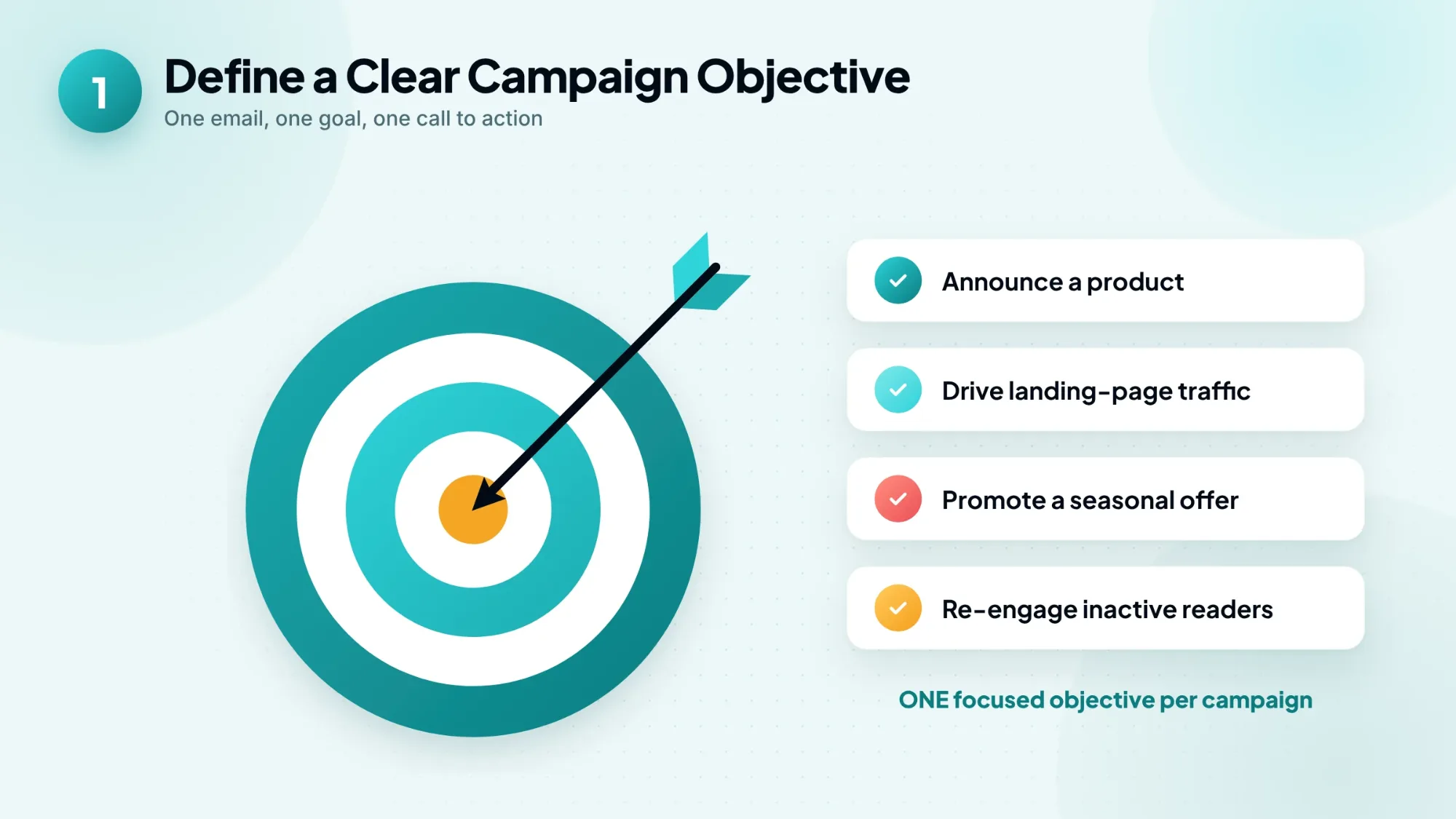
1. Start With a Clearly Defined Campaign Objective
Every email campaign should have a specific purpose.
Before preparing the message, determine what you want recipients to do after reading it.
Your objective might include:
Announcing a new product or service.
Generating traffic to a landing page.
Promoting a seasonal discount.
Encouraging customers to complete a purchase.
Re-engaging inactive subscribers.
Sharing an important company update.
Introducing a new feature or business announcement.
Avoid combining too many objectives in one email. When a campaign promotes several unrelated offers, recipients may struggle to understand the main message.
A clearly defined objective helps determine the email design, audience, copywriting approach and call to action.
2. Clean and Organise Your Subscriber List
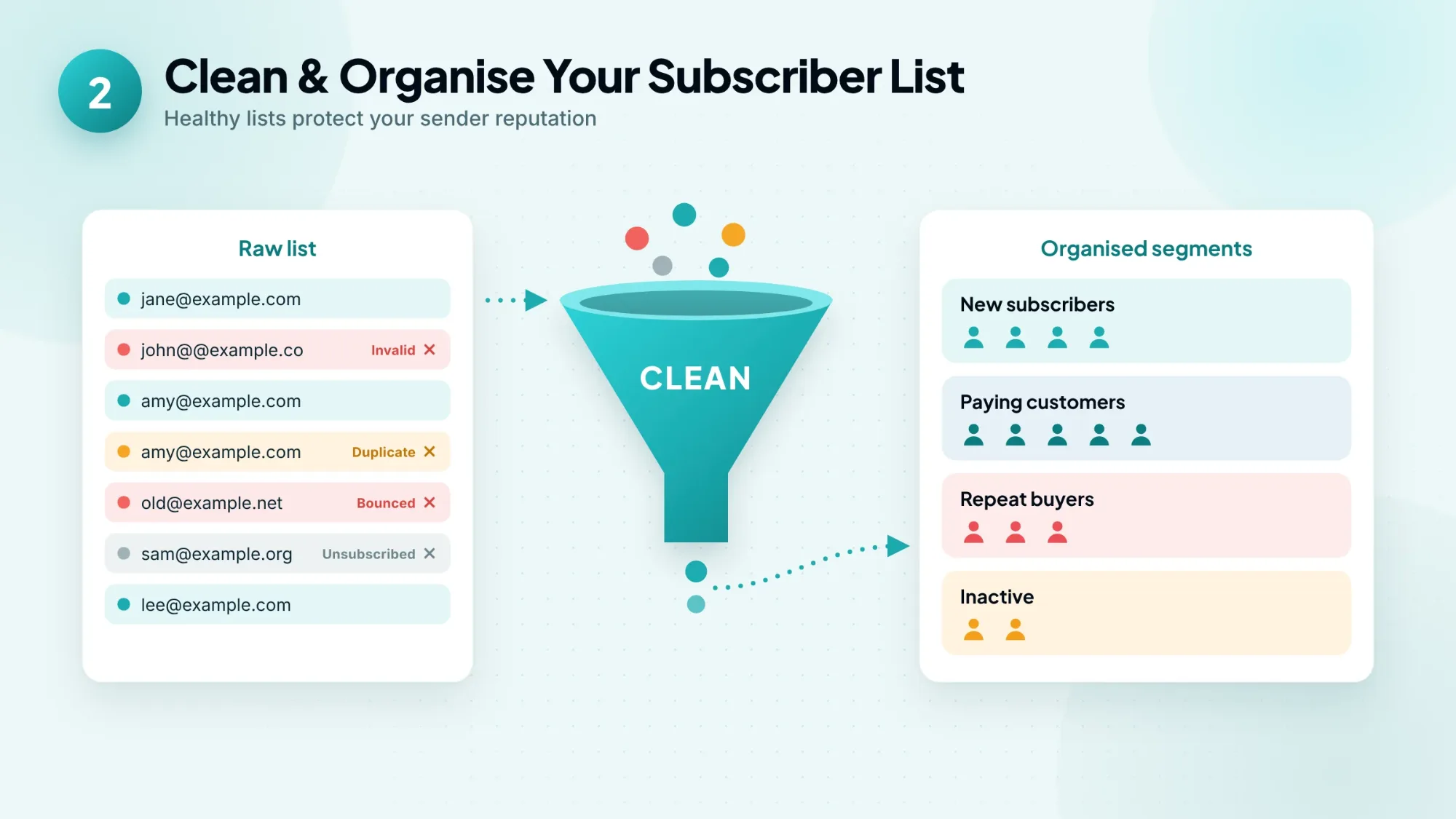
A large subscriber list is not necessarily a valuable subscriber list.
Businesses should regularly review their email databases to identify invalid addresses, duplicate contacts, unsubscribed users and consistently inactive subscribers.
List hygiene is important because sending messages to outdated or invalid addresses can increase bounce rates and negatively affect sender reputation.
Consider organising subscribers into groups such as:
Recently subscribed customers.
Existing paying customers.
First-time buyers.
Repeat purchasers.
Inactive subscribers.
Customers interested in specific products.
Business leads who have not converted.
Even when sending a broad campaign, businesses can exclude contacts who should not receive that particular communication.
For example, existing customers may not need an introductory offer designed specifically for new subscribers.
3. Combine Mass Distribution With Audience Segmentation
One of the biggest mistakes businesses make is assuming that batch-and-blast campaigns must always target the entire database.
Segmentation allows brands to maintain the convenience of large-scale distribution while making communication more relevant.
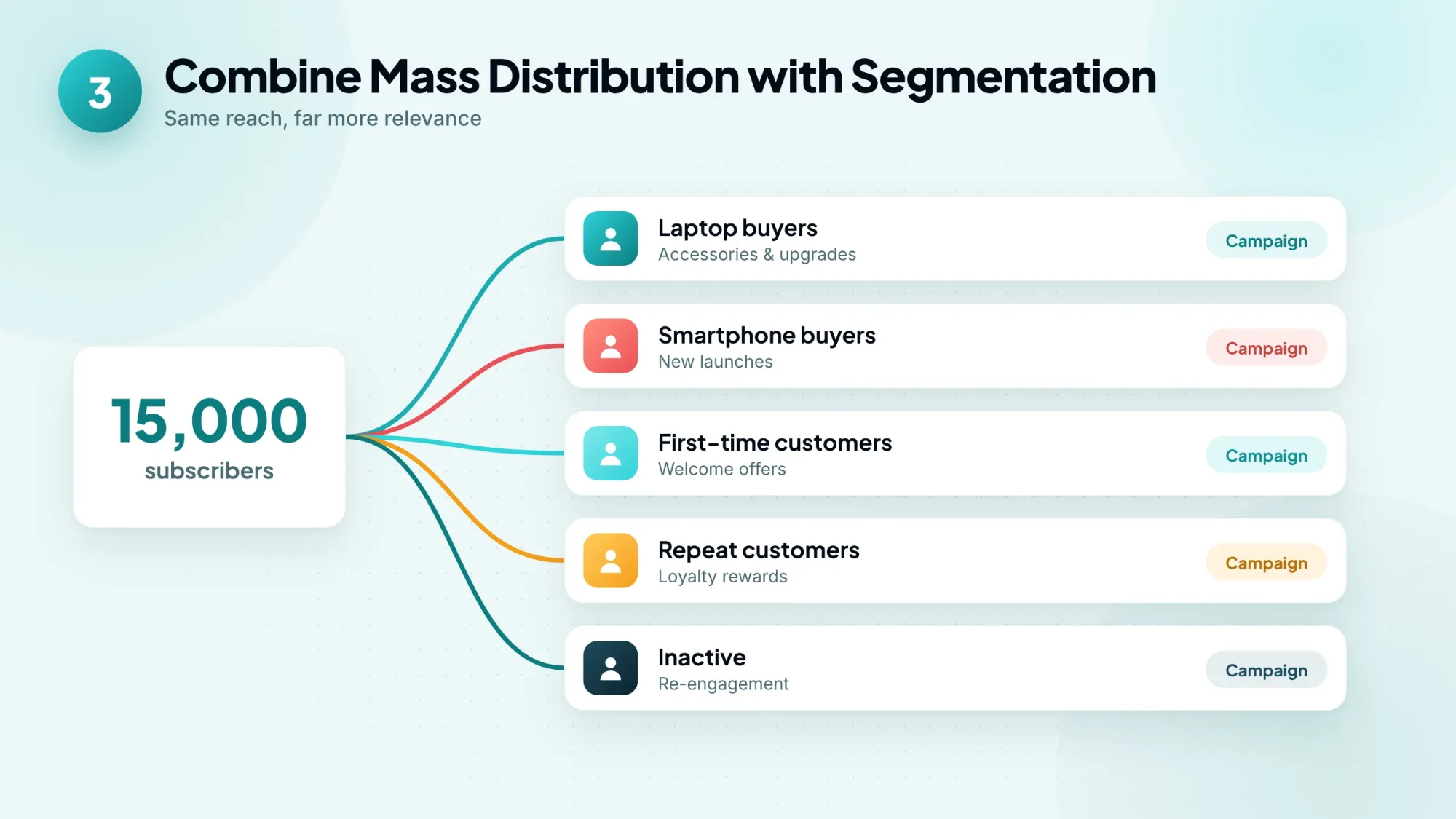
Consider an online electronics retailer with 15,000 subscribers.
Instead of sending every promotional email to all 15,000 contacts, the business could create groups based on:
Audience segment | Suitable email campaign |
|---|---|
Laptop buyers | Laptop accessories and upgrades |
Smartphone buyers | New smartphone launches |
First-time customers | Product education and welcome offers |
Repeat customers | Loyalty rewards and exclusive deals |
Inactive subscribers | Re-engagement campaigns |
Newsletter subscribers | Industry updates and useful guides |
Each campaign can still reach thousands of people, but the message has a clearer purpose.
This is an important part of building a more effective batch and blast email marketing campaign strategy for 2027.
4. Write Subject Lines That Communicate Real Value
The subject line is often the first element subscribers notice.
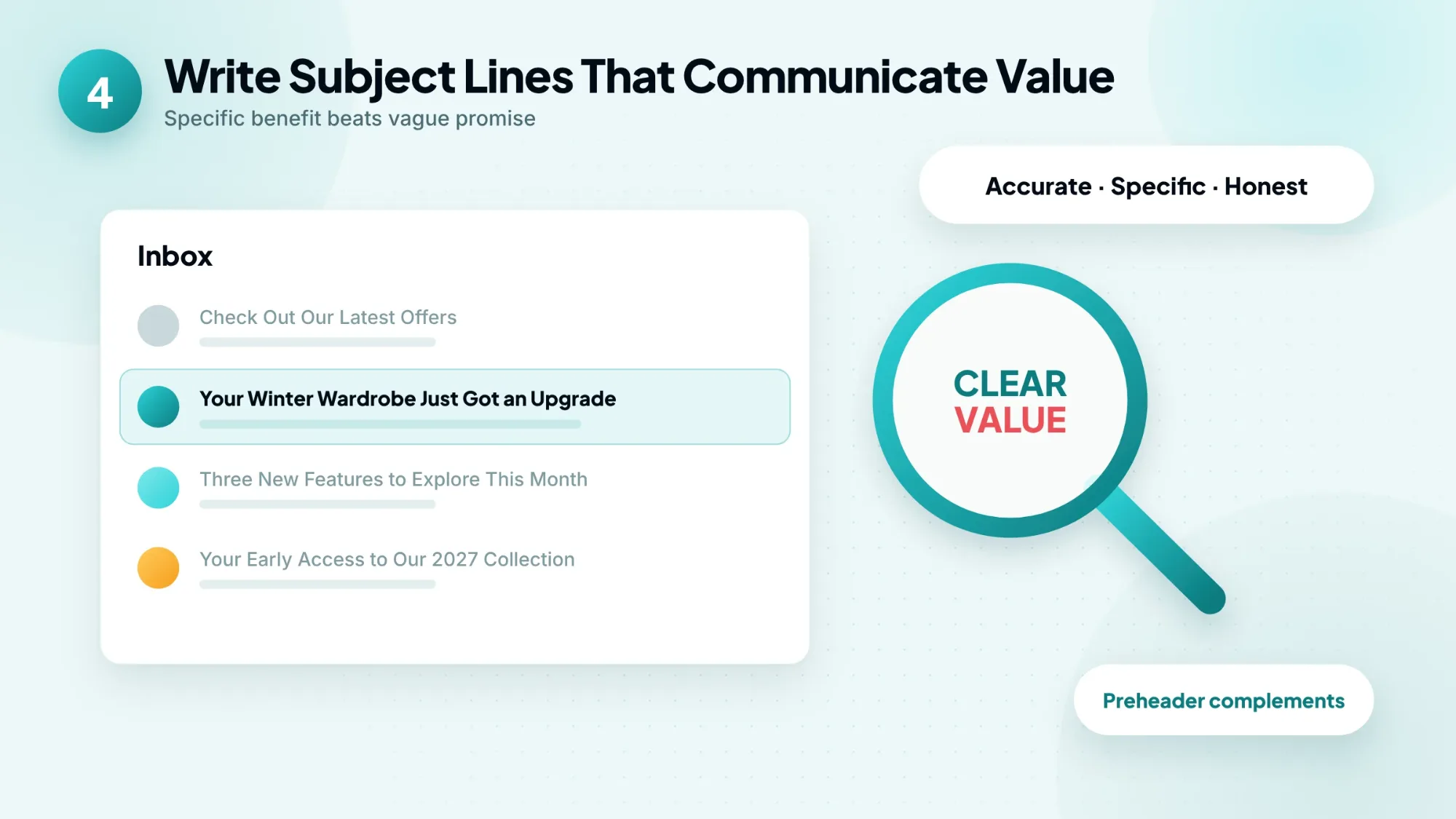
A vague subject line such as "Check Out Our Latest Offers" does not explain why someone should open the message.
Instead, businesses should communicate a specific benefit or announcement.
For example:
"Your Winter Wardrobe Just Got an Upgrade"
"Three New Features to Explore This Month"
"Your Early Access to Our 2027 Collection"
"A Better Way to Manage Your Business Expenses"
The subject line should accurately represent the email content. Misleading subject lines may generate initial curiosity but can damage customer trust.
Preheader text should also complement the subject line rather than repeat it.
5. Make Email Personalisation More Meaningful
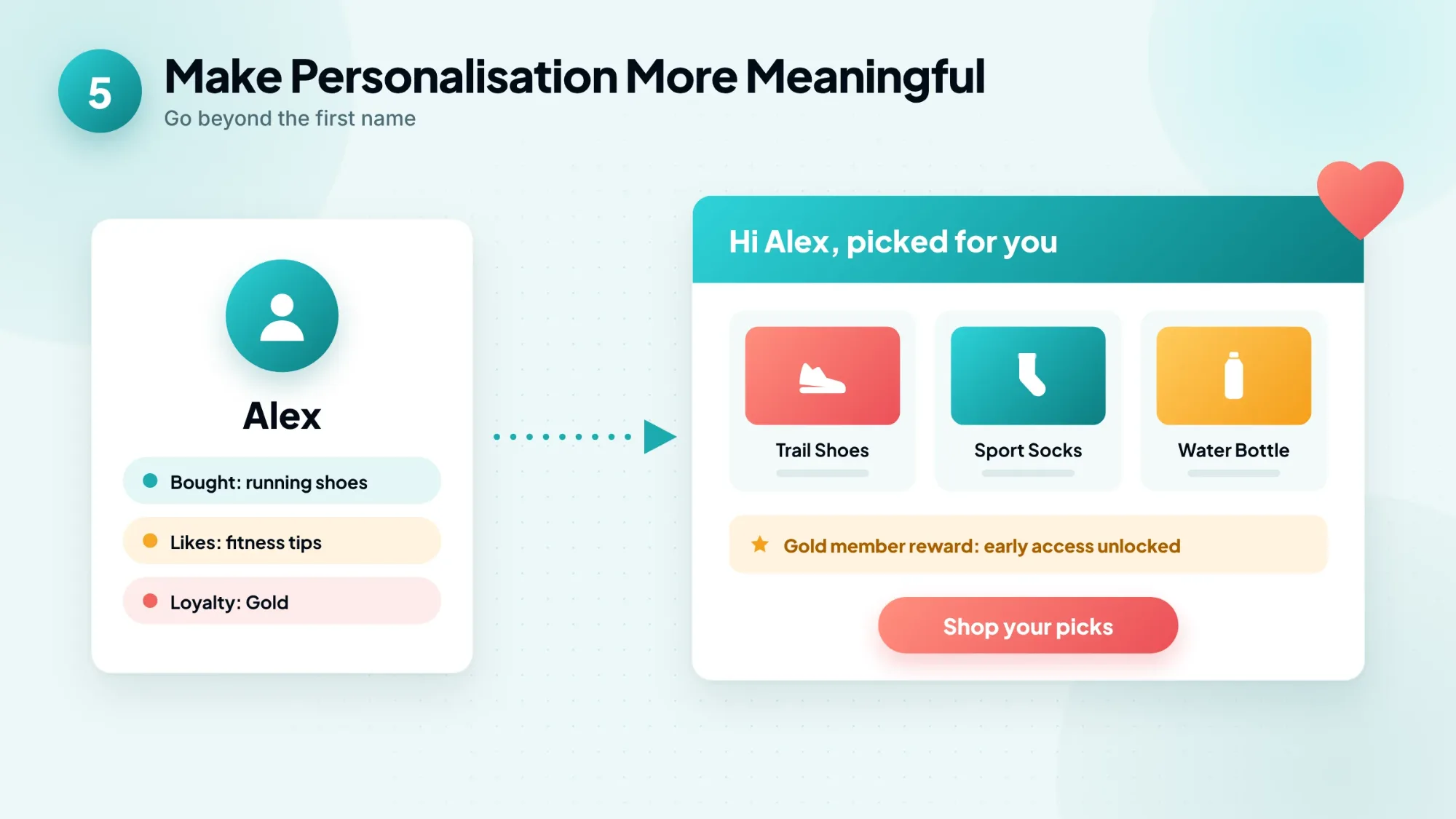
Personalisation goes beyond adding a recipient's first name to an email.
Businesses can use appropriate customer information to improve message relevance.
Examples include:
Recommending products based on previous purchases.
Sharing relevant content based on subscription preferences.
Providing reminders based on customer activity.
Offering loyalty rewards to repeat purchasers.
Highlighting features relevant to a customer's plan.
However, personalisation should respect customer privacy and applicable data protection requirements.
Businesses should be transparent about data collection and avoid using sensitive information without an appropriate legal basis.
6. Choose the Right Sending Schedule
Sending every campaign at the same time may not be suitable for every audience.
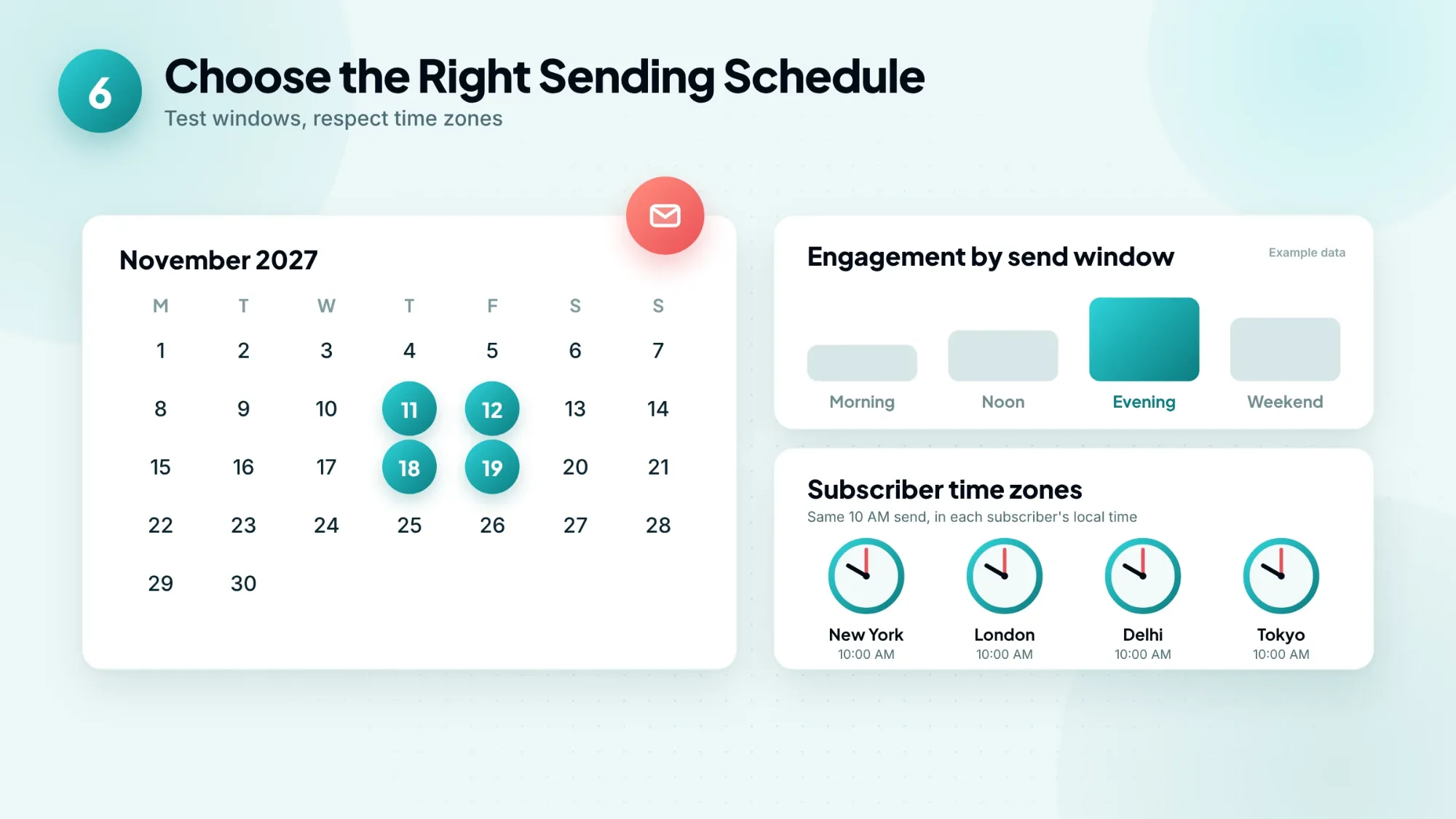
A B2B company communicating with professionals might prefer weekday campaigns, while a consumer retailer may discover stronger engagement during evenings or weekends.
However, there is no universal best time for every industry.
Businesses should analyse their own historical campaign performance, test different sending windows, and consider the time zones of their subscribers.
For larger campaigns, gradual distribution can also help teams monitor technical performance and identify unusual bounce or complaint patterns.
7. Create Mobile-Friendly Email Designs
Many subscribers access emails through smartphones.
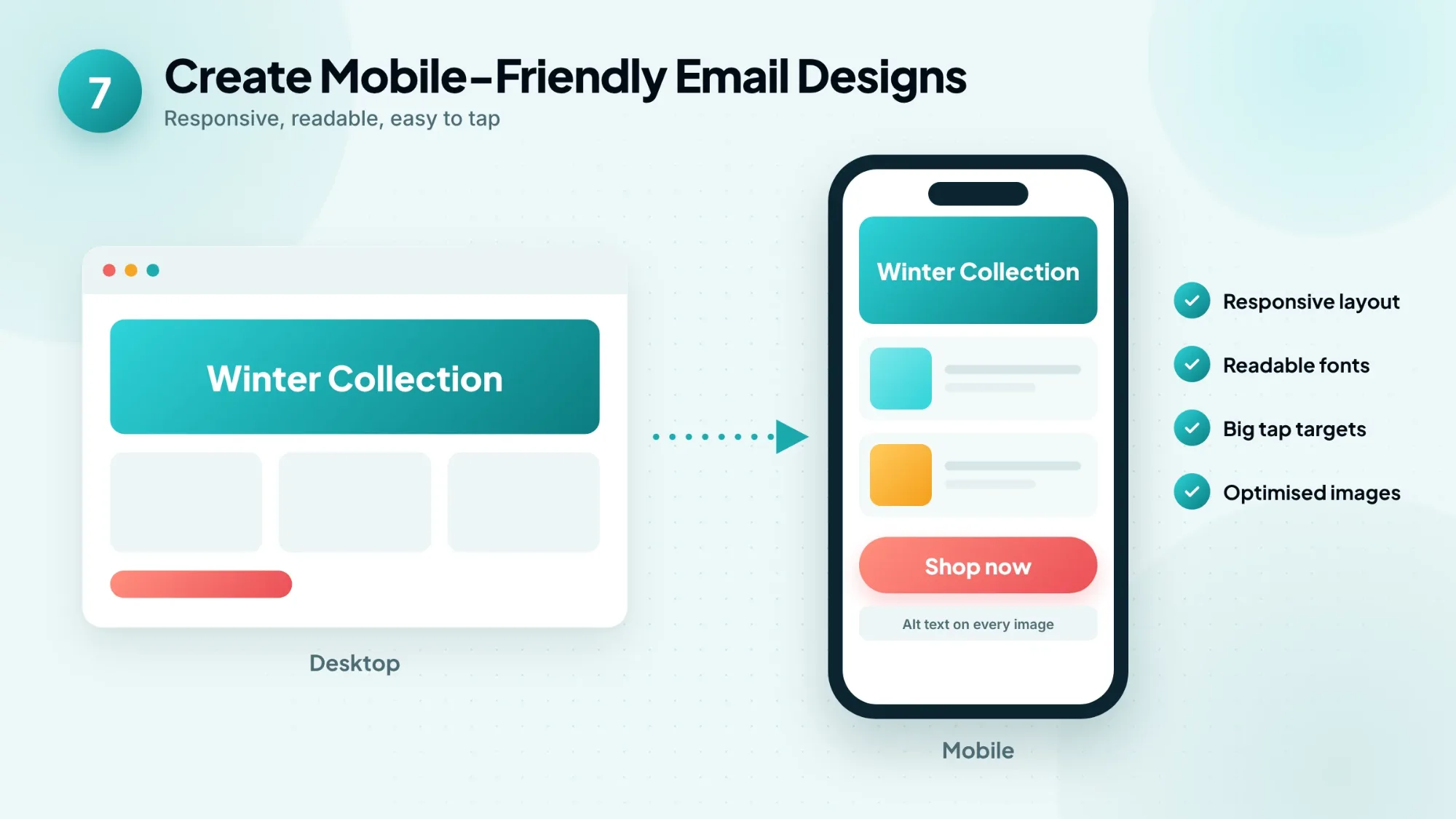
An email that looks attractive on a desktop but requires excessive zooming or horizontal scrolling can create a frustrating experience.
A mobile-friendly email should include:
Responsive layouts.
Readable font sizes.
Clear visual hierarchy.
Concise paragraphs.
Properly sized buttons.
Optimised images.
Sufficient spacing between clickable elements.
Accessibility should also be considered. Use meaningful alternative text for important images and maintain adequate colour contrast.
A well-designed email should communicate its message even when some images are blocked.
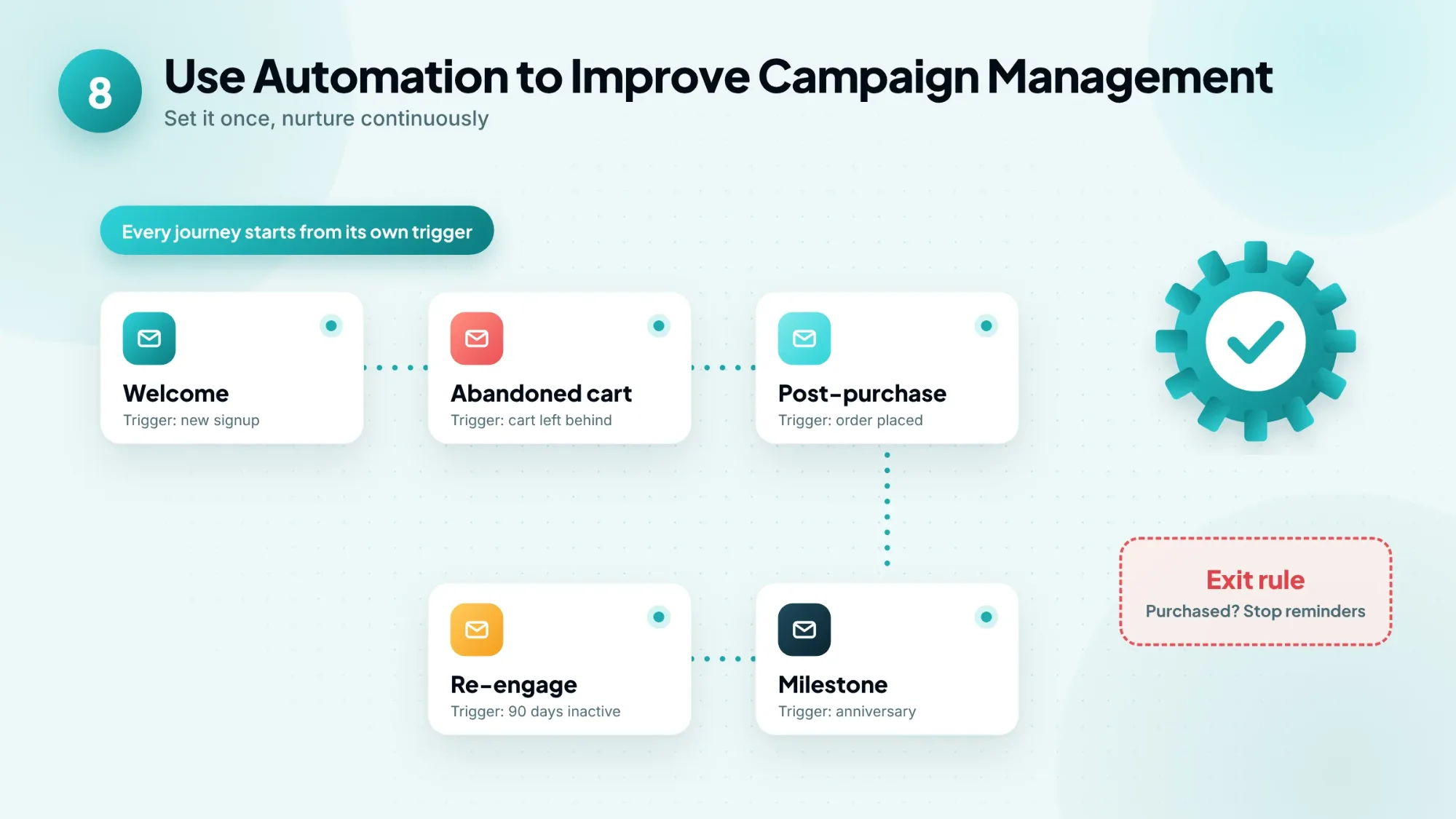
8. Use Automation to Improve Campaign Management
Manual campaign management becomes increasingly complicated as a business grows.
Email automation can help companies manage recurring communication without preparing every message from scratch.
Useful automated workflows include:
Welcome sequences: Introduce new subscribers to the business, its products and its services.
Abandoned cart reminders: Remind customers about products they added to their shopping carts but did not purchase.
Post-purchase emails: Share order information, product guidance and relevant follow-up communication.
Re-engagement campaigns: Contact inactive subscribers with relevant updates or preference options.
Customer milestone emails: Recognise anniversaries, subscription renewals and other meaningful events.
Automation should always include appropriate conditions and exit rules. Customers who have already completed a purchase should not continue receiving reminders intended for non-buyers.
How Is AI Changing Batch-and-Blast Email Marketing?
Artificial intelligence is changing how businesses plan, create and optimise email campaigns.
Instead of manually developing every element, marketers can use AI-assisted tools to generate subject line ideas, draft promotional copy, recommend content variations and analyse campaign performance.
Some emerging applications include:
I. AI-Assisted Audience Analysis
AI tools can help marketers identify patterns in customer behaviour and organise subscribers into meaningful groups.
For example, an online retailer might discover that customers who purchase specific product categories are also interested in complementary accessories.
These insights can inform future campaigns.
II. Automated Email Copywriting
AI writing tools can generate initial drafts based on a campaign objective, target audience, and brand guidelines.
However, human review remains important. Businesses should verify product claims, pricing, promotional conditions, and factual information before sending campaigns.
III. Predictive Campaign Optimisation
Some marketing platforms use predictive models to estimate customer engagement and recommend campaign adjustments.
Depending on available data, these systems may help identify suitable audiences, sending windows or content variations.
However, predictions should be treated as recommendations rather than guarantees.
How to Measure the Success of Your Email Campaigns?
A successful campaign should be evaluated through meaningful business outcomes rather than email volume alone.
Metric | What it tells you |
|---|---|
Delivery rate | How many emails were successfully delivered |
Bounce rate | How many emails could not be delivered |
Click-through rate | How many delivered emails generated clicks |
Conversion rate | How many recipients completed the desired action |
Unsubscribe rate | How many subscribers opted out |
How many recipients reported the email as spam | |
Revenue per recipient | How much revenue each delivered email generated |
List growth rate | How quickly the subscriber database is growing |
Open rates can provide directional information, but privacy features such as Apple's Mail Privacy Protection make them less reliable as a standalone performance measure.
Businesses should focus more on clicks, conversions, revenue, and subscriber retention.
Common Mistakes to Avoid in 2027
Even a well-designed campaign can underperform when businesses overlook basic email marketing practices.
Avoid these mistakes:
Sending every promotional email to the entire subscriber database.
Purchasing email lists instead of building permission-based audiences.
Ignoring unsubscribe requests and customer preferences.
Using misleading subject lines to increase opens.
Sending too many promotional messages.
Neglecting mobile responsiveness.
Ignoring email authentication and deliverability.
Failing to measure conversions and revenue.
Continuing automated reminders after a customer has purchased.
Treating AI-generated content as ready to publish without human review.
How Messaro Helps Businesses Manage Email Marketing Campaigns?
Managing email campaigns becomes easier when businesses have a platform that brings campaign creation and customer communication together.
At Messaro, we focus on helping businesses simplify email and SMS marketing through practical tools that support campaign management, automation, and customer engagement.
Our AI-powered email builder makes it easier to turn a simple idea into an email design. Businesses can provide a short description of what they want to communicate, and our AI builder helps create an email with relevant copy, imagery, and layout.
This can reduce the time spent preparing promotional emails while giving marketing teams a convenient starting point for their campaigns.
With Messaro, businesses can also:
Create and manage email marketing campaigns.
Develop branded email content.
Use SMS campaigns to reach customers through text messages.
Automate follow-ups and recurring communication.
Manage customer conversations from a central dashboard.
Our objective is to make professional email and SMS marketing more accessible to businesses of different sizes.
Whether you are announcing a new product, communicating a seasonal offer, or nurturing existing customers, Messaro provides tools to help organise your marketing activities more efficiently.
Conclusion
Batch-and-blast email marketing still has a place in modern marketing, but businesses need to use it more strategically. Sending the same message to thousands of subscribers without considering relevance, timing or customer preferences can reduce engagement and create unnecessary inbox fatigue.
A more effective batch and blast email marketing campaign strategy for 2027 combines broad campaign distribution with segmentation, personalisation, automation and performance analysis.
Businesses should focus on delivering useful information, maintaining healthy subscriber lists and measuring meaningful outcomes.
With the right marketing approach and tools, mass email campaigns can remain an effective way to reach customers without making communication feel impersonal.
Ready to simplify your email marketing? Explore Messaro and discover how our AI-powered email builder, email campaigns, SMS marketing, and automation tools can help your business create better customer communication. Visit Messaro to get started.
Frequently Asked Questions (FAQs)
Q-1. What is batch-and-blast email marketing?
Batch-and-blast email marketing involves sending the same email campaign to a large group of subscribers simultaneously, generally without creating individual messages for different customer segments.
Q-2. Is batch-and-blast email marketing still effective in 2027?
Yes. It can work well for company announcements, product launches, and broad promotions. However, segmentation and relevant messaging can improve its effectiveness.
Q-3. How often should businesses send batch email campaigns?
There is no universal sending frequency. Businesses should consider subscriber preferences, campaign objectives, engagement patterns, and unsubscribe rates when determining their schedules.
Q-4. Can AI improve batch-and-blast email campaigns?
Yes. AI can assist with copywriting, audience analysis, subject line generation, and campaign optimisation. Human review is still necessary to maintain accuracy and brand consistency.
Q-5. Which metrics should businesses track for mass email campaigns?
Businesses should monitor delivery rates, bounce rates, click-through rates, conversions, revenue, unsubscribe rates and spam complaints to evaluate campaign performance.