
 Sebastian Stokkendal
In This Article▼
U.S. businesses preparing for 2027 have an opportunity to move beyond simple campaign automation toward more relevant, privacy-conscious communication. The most useful email and SMS marketing trends point toward better lifecycle planning, responsibly assisted personalization, direct customer data, conversational messaging, and earlier holiday preparation.
These developments are forward-looking, not guarantees. Their value will depend on a brand's data quality, software, audience history, operating discipline, and human review. The goal is to send fewer, better messages that fit the customer's journey rather than add more noise.
Why 2027 Could Be a Turning Point for Email and SMS
Three forces are reshaping the inbox and the text thread:
- AI is becoming operational infrastructure. Beyond assisting with copy and subject lines, suitable tools can support segmentation, recommendations, testing, and lifecycle workflows when they have reliable inputs and appropriate oversight.
- Privacy and trust are essential. Customer expectations, platform restrictions, consent obligations, and filtering systems reward transparent data use and thoughtful messaging frequency.
- Customers expect relevance, not volume. People are more likely to disengage, unsubscribe, or complain when messages feel excessive or disconnected from their needs.
For U.S. businesses, the practical opportunity is to coordinate email and SMS around customer needs. Email can carry detail, while SMS can provide a timely reminder or support interaction. This comparison of SMS and email for ecommerce explains how the channels can play distinct roles.
1. AI-Assisted Lifecycle Automation
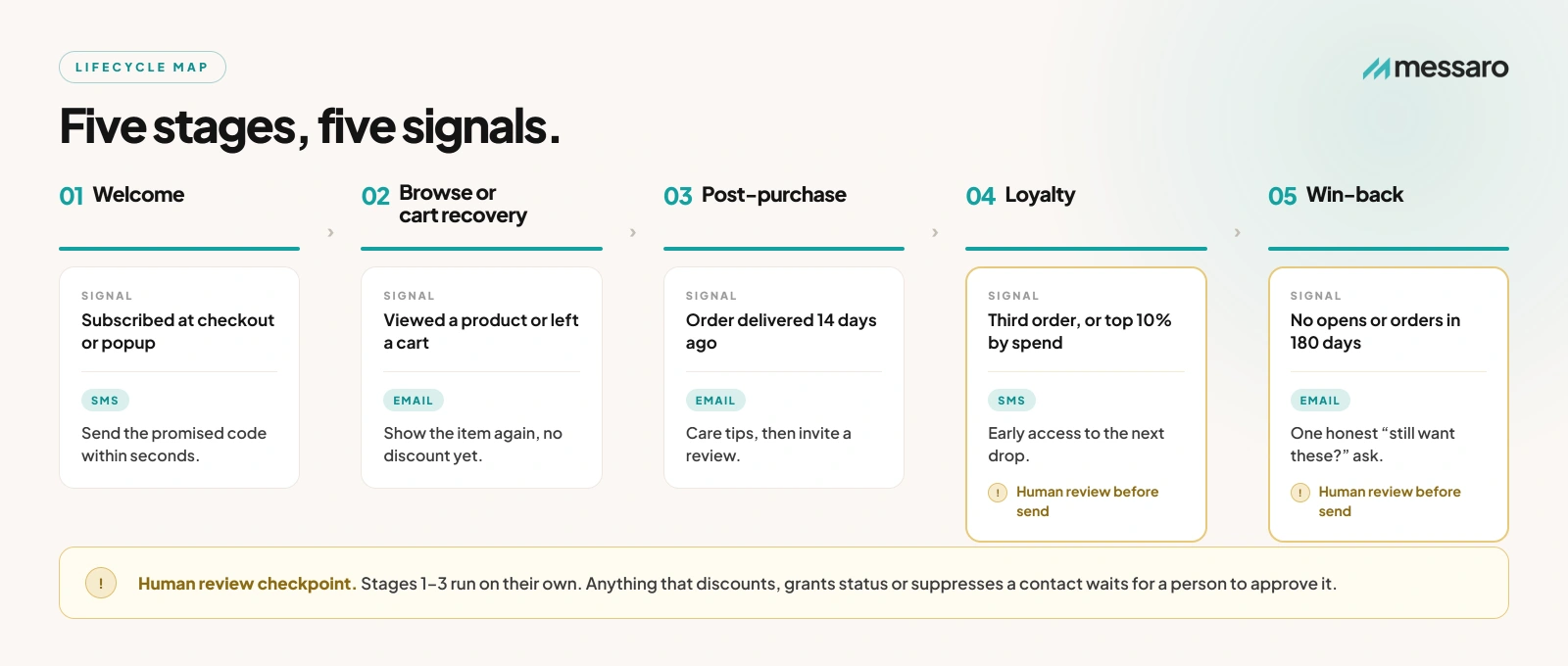
A major trend for 2027 is the shift from isolated campaigns toward customer-journey automation. Instead of sending the same promotion to everyone, businesses can use connected behavioral and preference data to shape communication at each stage. AI can help analyze patterns or draft variations, but the resulting workflow still needs clear rules, quality data, suitable software, and human review.
What it looks like
- Welcome series: Tailor onboarding by signup source, declared interests, and early engagement.
- Browse and cart recovery: Adapt reminders to product category, elapsed time, and known preferences without making the message feel intrusive.
- Post-purchase flows: Share care guidance, request reviews, suggest relevant complements, or time replenishment reminders.
- Win-back campaigns: Identify declining engagement, then test different offers, tones, and channels.
- Loyalty and retention: Personalize rewards, early access, and useful content based on demonstrated engagement.
For example, a retailer might send a detailed order-care email, follow it later with a replenishment reminder, and reserve SMS for a time-sensitive update. Teams can start with one dependable flow before expanding. See this guide to ecommerce email marketing for more lifecycle examples.
2. Predictive Segmentation and Real-Time Personalization
Traditional segmentation often uses broad labels such as new, active, or inactive. A wider market direction is predictive scoring, in which software estimates outcomes such as:
- Purchase likelihood within a defined period
- Churn risk based on engagement patterns
- Discount sensitivity and likely offer preference
- Preferred channel, such as email or SMS
- A potentially effective send time for an individual
These estimates are not facts. They require enough relevant history, connected and accurate data, appropriate software, ongoing validation, and human judgment. New or low-volume programs may get more value from understandable rules and direct preferences than from complex scoring.
Real-time personalization in practice
- Dynamic product blocks informed by recent browsing or purchases
- Location-aware messaging for a relevant local event or store
- Inventory-aware recommendations when a reliable commerce integration supplies current stock data
- Subject lines and preheaders that accurately reflect recent behavior
A connected retailer could suppress an out-of-stock recommendation and substitute an available alternative. Another business might route a service reminder through the channel the customer selected. These capabilities depend on fresh source data and careful fallback rules, not AI alone.
3. Zero-Party and First-Party Data Strategies
Brands are reducing reliance on third-party identifiers because of privacy expectations, platform restrictions, signal loss, and a desire to govern the data they use. This change should not be described simply as third-party cookies disappearing. Browser policies have changed in different ways, and the practical response is to build direct, permission-based customer relationships.
Examples of zero-party data collection
- Preference quizzes that ask what a customer is shopping for
- Product finders and style guides
- Optional birthday or anniversary fields
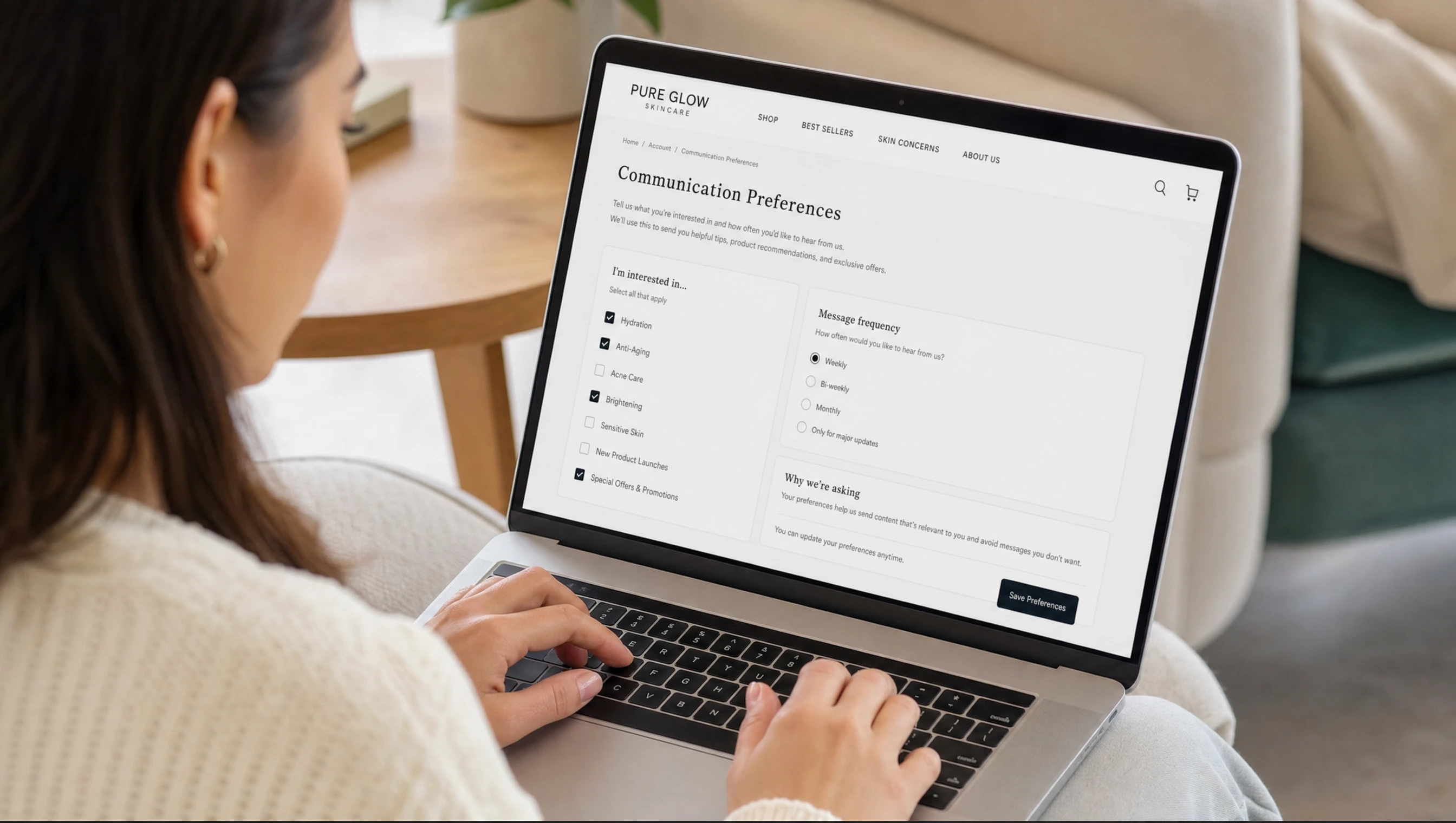
- Communication frequency and channel preferences
- Interest-based signup choices, such as skincare deals or haircare deals
A skincare store could ask about product interests and desired message frequency, then use those answers to create understandable segments. A service business could let customers choose appointment reminders by email, SMS, or both. Collect only information that has a clear purpose, explain that purpose, and make preferences easy to change.
4. Conversational SMS and Two-Way Messaging
Another important trend is the move from one-way promotional texts toward useful, two-way conversations. Customers may be able to reply, ask questions, confirm appointments, or request help from the same thread. Businesses new to the channel can begin with this overview of what SMS marketing is.
How conversational SMS can add value
- Customers reply with questions about products, sizing, or availability.
- Automated responses handle narrow, common questions and route uncertain or complex issues to a person.
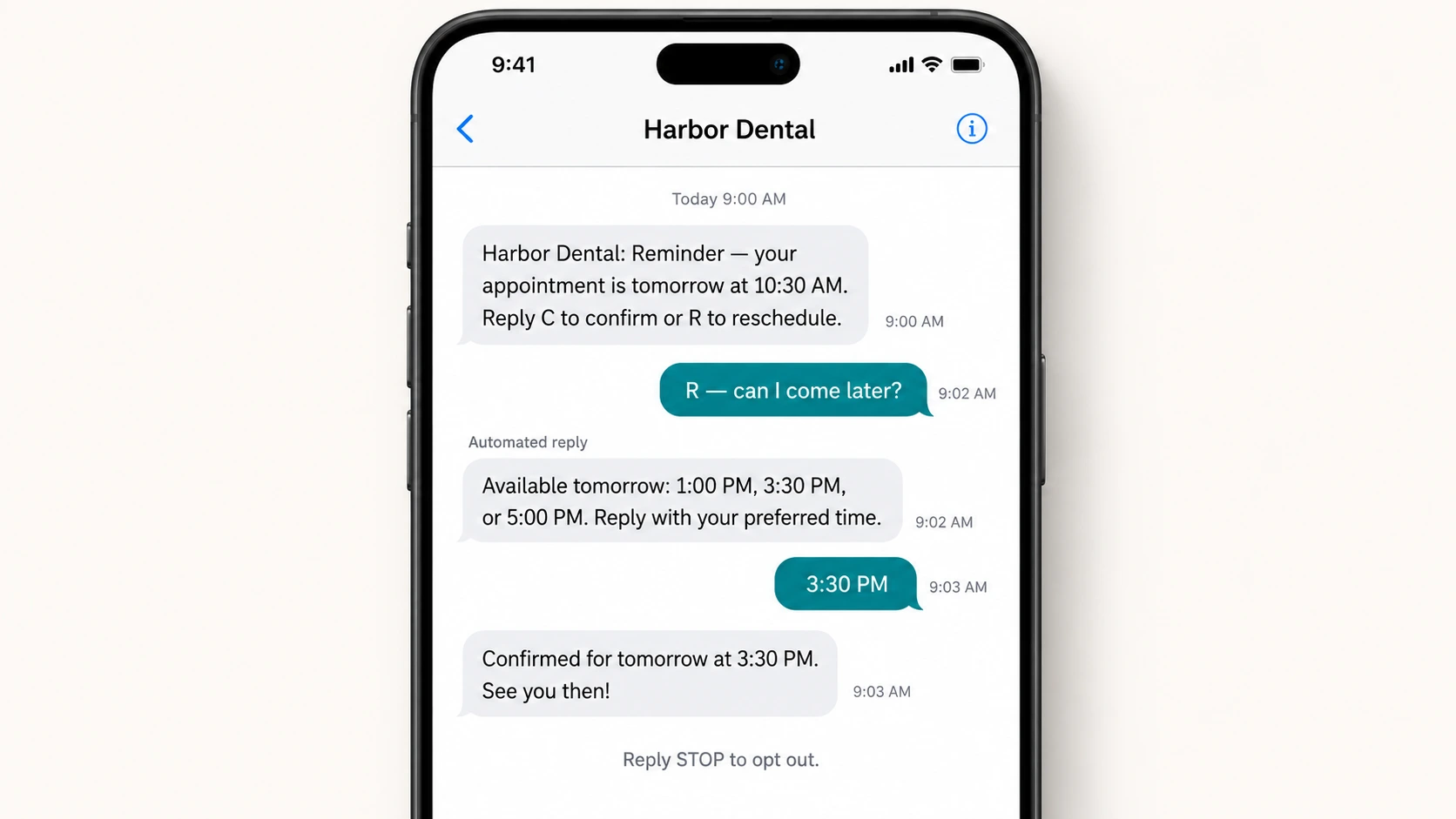
- Appointment reminders let customers confirm, reschedule, or cancel.
- Post-purchase texts invite feedback or offer support.
For example, a salon can send an appointment reminder with clear reply options, while a retailer can move a product question into a shared conversation for a team member to answer. Set response expectations, identify the sender, preserve context during handoffs, offer easy opt-out instructions, and avoid excessive messaging. Automation should never pretend certainty when a human needs to review the question.
5. Privacy-First Personalization
Customers may value personalization while still expecting control. Businesses preparing for 2027 should obtain appropriate consent, offer clear preferences, respect frequency limits and quiet hours, avoid sensitive targeting, and make unsubscribe processes straightforward.
Practical steps for privacy-first marketing
- State what people are signing up for and how often they should expect messages.
- Use double opt-in for SMS when it is useful or appropriate for the program's risk profile and legal advice. It is not a universal requirement.
- Let subscribers choose channels, topics, and message frequency where practical.
- Honor opt-outs promptly across connected systems.
- Review data sources and AI-assisted decisions for error, bias, unnecessary sensitivity, or overreach.
- Keep records appropriate to the program's consent and suppression obligations.
Requirements vary by use case, jurisdiction, message type, and technology. Use the practical overview of U.S. SMS marketing laws as a starting point, then obtain qualified legal advice for the specific program.
6. Deliverability and Authentication
Email authentication and healthy sending behavior will remain foundational. U.S. senders should correctly configure SPF, DKIM, and, where appropriate, DMARC. They should also monitor bounces and complaints, suppress hard bounces, avoid purchased lists, and use subject lines that accurately represent the message.
SMS programs need suitable registration, such as applicable U.S. 10DLC registration, clear sender identification, valid consent practices, and adherence to carrier rules. None of these steps guarantees delivery or inbox placement. Reputation, recipient response, provider policy, message quality, and sending patterns all contribute.
For a measured technical workflow, read how to improve email inbox placement and deliverability. Messaro supports SPF and DKIM domain verification, but senders still need sound consent, list governance, content, and monitoring practices.
7. Accessible and Inclusive Messaging
Accessibility should be part of campaign planning, not a final check. Clear, inclusive communication expands the potential audience and reduces unnecessary barriers.
Email accessibility guidance
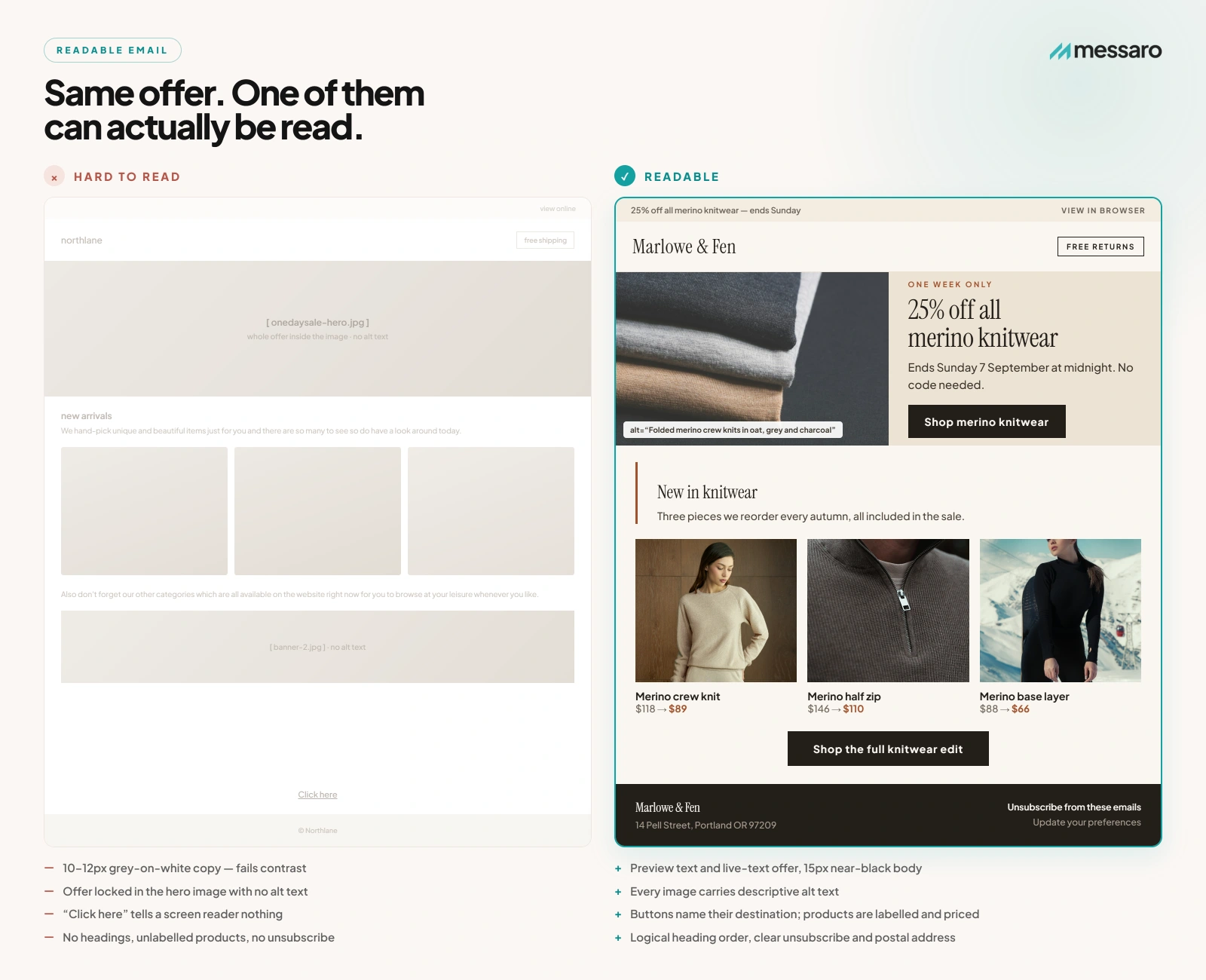
- Use readable type, sufficient color contrast, and responsive layouts.
- Include concise, descriptive alt text for meaningful images.
- Structure content with logical headings and descriptive links.
- Support keyboard navigation and common screen readers.
- Write in plain language where possible.
SMS accessibility guidance
- Keep messages concise without relying on unclear abbreviations.
- Use a direct call to action and clear opt-out instructions.
- Avoid meaning that depends only on emoji or capitalization.
- Make linked landing pages accessible too.
Holiday Campaign Planning for 2026–2027
Holiday periods remain important for email and SMS programs. Marketers can use the dates below to build a calendar, prepare creative work, establish audience rules, and leave enough time for testing. The dates have been grouped by year for clarity.
| Holiday | Date |
|---|---|
| 2026 | |
| Labor Day | Monday, September 7, 2026 |
| Halloween | October 31, 2026 |
| Thanksgiving | Thursday, November 26, 2026 |
| Black Friday | November 27, 2026 |
| Cyber Monday | November 30, 2026 |
| Christmas | December 25, 2026 |
| 2027 | |
| New Year's Day | January 1, 2027 |
| Martin Luther King Jr. Day | January 18, 2027 |
| Presidents Day | February 15, 2027 |
| Memorial Day | May 31, 2027 |
| Independence Day | July 4, 2027 |
| Labor Day | Monday, September 6, 2027 |
| Thanksgiving | Thursday, November 25, 2027 |
| Black Friday | November 26, 2027 |
| Cyber Monday | November 29, 2027 |
| Christmas | December 25, 2027 |
How AI can assist holiday campaigns
- Early planning: Analyze reliable past results to suggest launch windows for human review.
- Segmentation: Help teams identify potential gift buyers, self-purchasers, and last-minute shoppers.
- Recommendations: Suggest products using consented browsing, purchase, and preference data.
- Send-time testing: Estimate useful timing only when software has sufficient individual history, then validate against actual results.
- Inventory awareness: Suppress unavailable products only when a dependable, current inventory feed is connected.
- Post-holiday retention: Assist with review requests, loyalty messages, and win-back workflows.
These capabilities depend on connected systems and accurate history. A small business can still benefit from simpler segments, a campaign calendar, and controlled A/B tests. Planning by August can create time for coordinated creative, consent checks, and contingency plans. For a near-term example, explore these Labor Day 2026 marketing ideas.
Measuring Success Beyond Open Rates
Open rates are directionally useful, but privacy features and automated activity can limit what they reveal. Match measurement to the campaign's actual purpose.
Key performance indicators to track
- Revenue per recipient: Attributed revenue divided by the number of recipients
- Conversion rate: The percentage of recipients who complete the intended action
- Repeat purchase rate: The share of customers who return after an initial purchase
- Customer lifetime value: An estimate of customer value over time, based on an explicit model and reliable history
- Unsubscribe and complaint rates: Indicators of list health and message relevance
- SMS opt-out rate: A signal that frequency, targeting, or content may be creating fatigue
Reports
Campaign performance and analytics
142
Total created
512,480
Total sent
98,240
Total received
19.2%
Average
Performance by Type
Response rates by campaign type
Response Trends
Performance over time
Top Performing Campaign
Best based on response rate
Summer Kickoff
March 5th, 2026
25.7%
Response Rate
12,480
Sent
3,210
Responses
99.2%
Delivery
SINGLE
Type
Suitable analytics software may assist with attribution, segment analysis, and optimization ideas, but attribution is model-dependent. Connected data, consistent tracking, enough observations, and human interpretation are necessary before acting on a recommendation.
Common Mistakes to Avoid
- Over-automation: Sending too many messages without human oversight
- Shallow personalization: Adding a first name without making the content more relevant
- Ignored preferences: Failing to honor channel or frequency choices
- Poor list hygiene: Retaining invalid or persistently unengaged addresses without a defined policy
- Misleading subject lines: Creating expectations the message does not meet
- Weak mobile design: Making email or linked pages difficult to use on a phone
- Insufficient testing: Skipping controlled tests of subject lines, content, offers, or timing
- Inconsistent branding: Using conflicting tones or experiences across channels
Regular audits and human review can catch these problems before they erode trust or sending reputation.
How to Get Started
- Audit the current setup. Review domain authentication, consent records, list quality, segmentation, integrations, and automations.
- Define a measurable goal. Choose revenue, retention, engagement, loyalty, or another outcome that fits the program.
- Improve one lifecycle flow. Start with a welcome, cart recovery, appointment, or post-purchase sequence.
- Collect useful zero-party data. Add limited preference fields and explain how each answer improves communication.
- Test and iterate. Run controlled experiments on subject lines, content, timing, or channel use.
- Monitor trust and delivery signals. Track bounces, complaints, unsubscribes, SMS opt-outs, and provider feedback.
- Plan holidays early. Use past results as evidence, then build a reviewed 2027 calendar with room for changes.
Messaro can support this foundation with email and SMS campaigns, AI-assisted copy and subject lines, segmentation, automations, shared conversations, analytics, SPF and DKIM domain verification, and A/B testing. These tools support marketer decisions rather than replacing consent practices, reliable data, or human judgment. Teams exploring generated content can also review this guide to LLM-powered email marketing.
Final Thoughts
The most promising email and SMS marketing trends for 2027 are not about contacting customers more often. They point toward more useful timing, clearer preferences, better lifecycle coordination, and accountable use of automation.
Businesses that prepare well will balance technology with human judgment. They will use first-party and zero-party data responsibly, respect communication choices, prioritize authentication and deliverability, and create messages that feel relevant rather than mechanically generated.
For U.S. businesses preparing for the 2026–2027 holiday cycle, the work can begin now. Strengthen the basics, test one automation at a time, learn from customer behavior, and expand only when the data and operating process can support it.